About
Built for the decision makers.
Waking up to a 6am report that the weather is low risk means you can move on to the other things that matter in your day, without wildfire threats looming in the back of your mind.
Why this exists
Simplifying the decision
When extreme weather is hours away, a utility operations manager has to decide whether their infrastructure could start a fire. That call depends on the forecast, the fire spread modeling, and the structures exposed, and today those sit in different places. Most managers are left to pull those pieces together themselves, under pressure.
Flarecast takes a top-down approach. The most crucial information is available as easily understandable summaries and risk scores that aggregate the complex underlying variables affecting risk. That gives management quick answers and reduces the day-to-day concerns. It also means the underlying data is always available to view, interact with, and export, so any decision is as defensible as possible.
What it rests on
Peer-reviewed fire growth modeling
Flarecast is built on top of peer-reviewed fire growth modeling first published in 2013 and still regularly updated. The modeling has also undergone third-party research testing, including a research study at UC Berkeley.
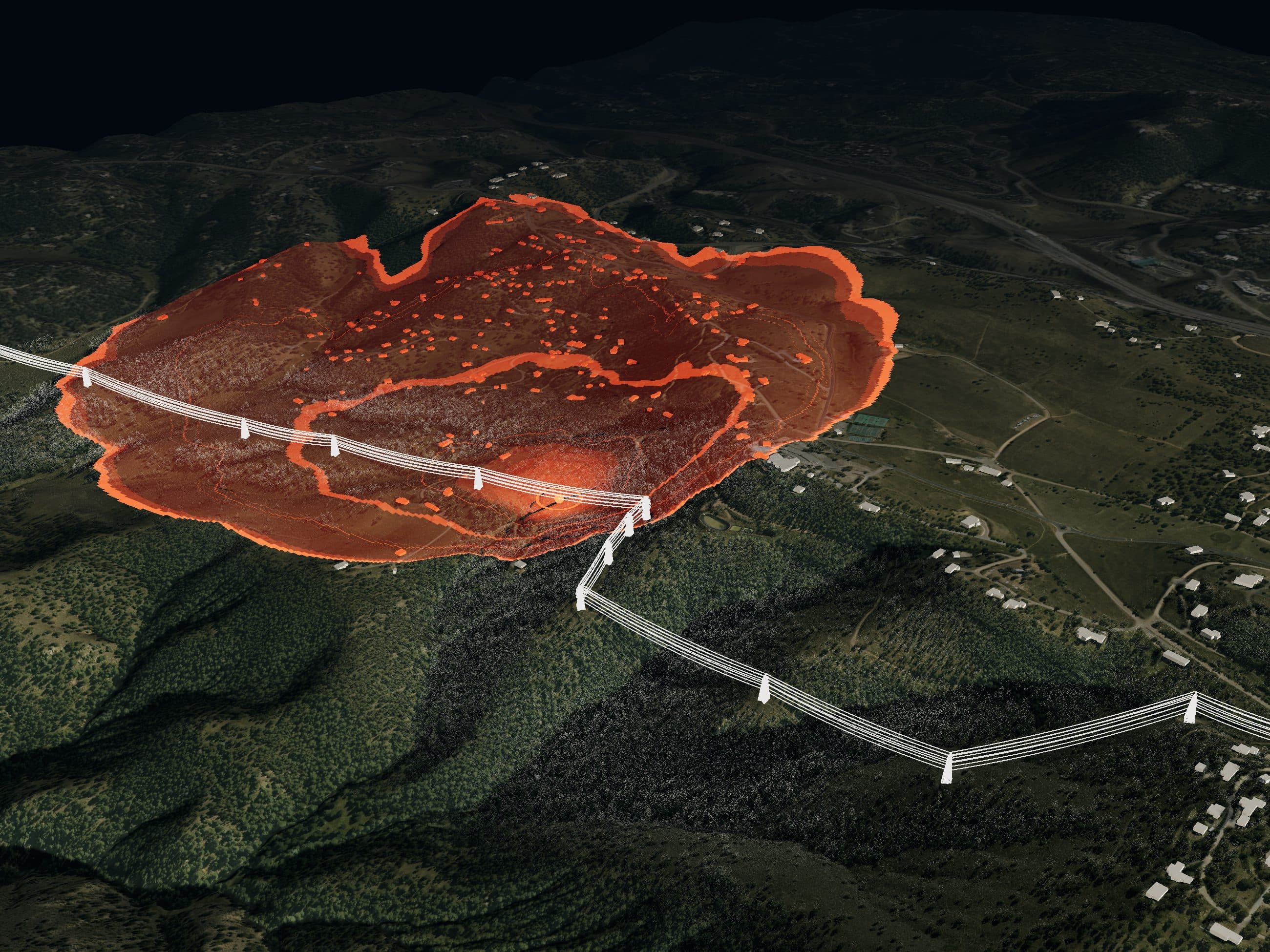
That modeling is the backbone of the risk scoring. It takes weather, terrain, and fuels as inputs and forecasts where fire may spread and who and what will be impacted. From there we derive risk calculations based on values exposed, populations impacted, financial liabilities, and more. Full citations and validation results are in the methodology and the technical documentation.
How we work
Built for the team running it
Flarecast is built to be usable by any utility, whether wildfire risk is handled by a dedicated team or by operations staff alongside everything else they do. The summaries and scores give a quick read. The full model and the data behind it are there for whoever needs to go deeper.
Flarecast is configurable to the procedures you already use. Alerts escalate and de-escalate on the triggers you already act on, such as extreme winds or core NFDRS indices, and we can work with you to set thresholds against our risk scoring.
We are currently in early access, giving a small number of partners hands-on access to the application before launch.
Early access is open to a small number of partners.
Contact us for a demo and try it for yourself.